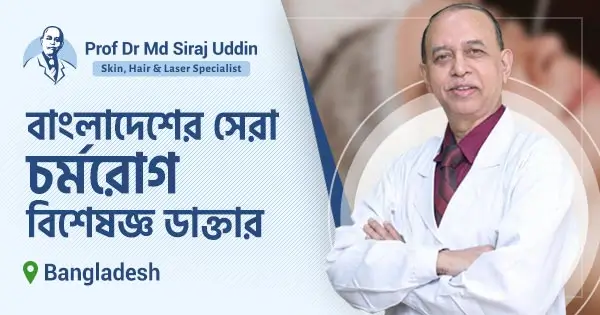
Seborrheic Dermatitis treatment in Bangladesh

Recurring dandruff, an itchy scalp, greasy flakes, or red and scaly skin around the nose, eyebrows and ears may be signs of seborrheic dermatitis. It often affects oily areas of the scalp and face. The symptoms can settle for a while, then come back again.

For seborrheic dermatitis treatment in Bangladesh, the first step is to confirm the condition and rule out similar skin problems. Depending on the affected area and severity, treatment may include medicated shampoo, antifungal medicine, short-term anti-inflammatory treatment, and proper scalp or skin care.

Call us at 01713-328546 to get your recurring scalp or facial skin problem checked by a leading dermatologist at Prof Dr Md Siraj Uddin.

Book an Appointment
Seborrheic Dermatitis treatment in Bangladesh

What is Seborrheic Dermatitis?

Seborrheic dermatitis is a common inflammatory skin condition. It mainly appears in areas where the skin produces more oil, particularly the scalp, eyebrows, sides of the nose, ears, beard area and upper chest.

The skin may look red, irritated or slightly discoloured, with white or yellowish greasy scales. On the scalp, it can look like stubborn dandruff. Some people have only mild flakes. Others develop noticeable inflammation and itching.

It is not contagious. You cannot catch seborrheic dermatitis by touching someone, sharing a room or using the same furniture. It is also not simply a sign of poor hygiene. One important point: in teenagers and adults, seborrheic dermatitis often behaves as a long-term, recurring condition. Proper treatment can control it well, but another flare may happen later.

Common symptoms of Seborrheic Dermatitis

Symptoms are not exactly the same for everyone. Scalp symptoms may also be mistaken for ordinary dandruff, psoriasis or another form of dermatitis. Common signs include:

  • White or yellowish flakes on the scalp
  • Greasy-looking scales
  • Persistent dandruff
  • Red or inflamed patches
  • Itchy scalp
  • Flaking around the eyebrows
  • Scaling beside the nose
  • Rash around or behind the ears
  • Flaking beneath a beard or moustache
  • Scaly patches on the upper chest
  • Mild burning or skin irritation
  • Patches that repeatedly clear and return
Note: On darker skin tones, inflammation does not always look bright red. Affected areas may appear pink, purple or lighter than the surrounding skin.
Book a Consultation
Seborrheic dermatitis common symptoms

What causes Seborrheic Dermatitis?

There is no single confirmed cause. Current evidence suggests that Malassezia yeast, natural skin oil or sebum, and the skin's inflammatory response all play a part. Malassezia normally lives on human skin. Seborrheic dermatitis tends to occur in areas with more sebaceous or oil-producing glands. Several things can also make an existing condition flare. These may include:

  • Stress
  • Cold or dry weather
  • Harsh soaps or skin products
  • Very hot showers
  • Sweat
  • Certain hair styling products
  • Skin irritation
  • Some illnesses or medications

Seborrheic Dermatitis treatment options in Bangladesh

Seborrheic dermatitis does not look the same in every patient. Some have loose dandruff and an itchy scalp. Others get greasy scales around the nose, eyebrows, ears or beard area. So, treatment needs to match where the problem is and how active it is.

Medicated shampoo for scalp seborrheic dermatitis

Medicated Shampoo for Scalp Seborrheic Dermatitis

A medicated shampoo is commonly used when seborrheic dermatitis affects the scalp. Depending on the condition, products may contain ingredients such as ketoconazole, ciclopirox, selenium sulfide, zinc pyrithione, and salicylic acid.

Antifungal Treatment

Seborrheic dermatitis is linked with Malassezia yeast, which normally lives on the skin. When needed, we may use an antifungal shampoo or topical medicine to bring the scaling and irritation under control. The form and frequency depend on whether the problem is on the scalp, face or another area.

Antifungal treatment
Short-term anti-inflammatory treatment

Short-Term Anti-Inflammatory Treatment

Sometimes antifungal treatment alone is not enough. The skin may remain very red, itchy or inflamed. A dermatologist may then prescribe a topical corticosteroid for a short period to settle an active flare. These medicines need sensible use, particularly on facial skin.

Treatment for Facial Seborrheic Dermatitis

We first look at the affected areas—often the eyebrows, sides of the nose, hairline, ears or beard area. Treatment includes an antifungal cream, a suitable moisturiser and short-term medicine for inflammation. For recurring cases, a steroid-sparing topical medicine may be considered when appropriate.

Treatment for facial seborrheic dermatitis
Maintenance treatment for recurring flare-ups

Maintenance Treatment for Recurring Flare-Ups

Seborrheic dermatitis often comes back. That does not always mean the previous treatment failed. Once the active rash settles, we may advise maintenance treatment at longer intervals. For example, a medicated shampoo may be continued once in a while instead of waiting until heavy dandruff and itching return.

Treatment for Stubborn Seborrheic Dermatitis

If the condition keeps returning despite treatment, we check again rather than simply adding another cream. Psoriasis, eczema, contact dermatitis and some fungal conditions can look quite similar. Severe or resistant cases may therefore need a fresh skin and scalp assessment before the treatment plan is changed.

Treatment for stubborn seborrheic dermatitis

How is Seborrheic Dermatitis diagnosed?

There is usually no complicated test. A dermatologist can often diagnose seborrheic dermatitis by examining the skin and scalp, looking at the type of scale and checking its distribution. This examination matters because several skin conditions can look similar. These include:

If the appearance is unusual or treatment has repeatedly failed, further investigation may sometimes be considered. The important part is getting the diagnosis right before repeatedly applying creams or changing shampoos.

Start Diagnosed Today: 01713-328546

When should you see a Dermatologist?

Mild dandruff can often be managed with routine scalp care. But persistent or inflamed disease deserves proper assessment. A correct diagnosis saves a lot of trial and error. Consider seeing a dermatologist if:

  • Dandruff keeps returning despite treatment
  • Your scalp is very red or itchy
  • Thick scales are developing
  • The rash has spread to your face or ears
  • Facial redness repeatedly comes back
  • The skin is painful, swollen or oozing
  • Scratching has caused sores
  • You notice significant hair shedding with scalp inflammation
  • Previous creams are no longer working
  • You have been using a steroid cream repeatedly
  • You are not sure whether it is dermatitis, psoriasis or a fungal condition
  • The condition is affecting several areas of the body

Seborrheic Dermatitis in babies and cradle cap

Babies can develop a form of seborrheic dermatitis commonly called cradle cap. It usually appears as greasy or thick scale over the scalp and behaves differently from adult seborrheic dermatitis. Infantile disease often settles as the child gets older.

Gentle scalp washing and careful removal of loosened scales may be enough in mild cases. More extensive or inflamed disease should be assessed by a doctor, especially before using medicated products intended for adults.

Seborrheic Dermatitis in babies

Why choose Prof Dr Md Siraj Uddin for Seborrheic Dermatitis treatment?

Prof Dr Md Siraj Uddin is a senior dermatologist with more than 25 years of experience in skin, hair and aesthetic care in Bangladesh. His clinical work covers dermatology, cosmetology, laser procedures and hair restoration. He currently works as a senior consultant in dermatology and aesthetics at Square Hospital Ltd., Dhaka.

Over the years, he has gained professional exposure in Bangladesh and abroad, including Dhaka, Sylhet, Bangkok and New York. This long clinical background is useful when dealing with recurring skin problems such as seborrheic dermatitis, where the condition can look similar to dandruff, psoriasis, eczema or other scalp disorders.

Below are reasons why you should choose Prof Dr Md Siraj Uddin:

  • Proper skin and scalp assessment to confirm whether the problem is seborrheic dermatitis or something similar.
  • Treatment based on the affected area, whether symptoms are on the scalp, face, eyebrows, ears or beard area.
  • Medicine and medicated shampoo guidance based on the severity of scaling, itching and inflammation.
  • Recurring flare management if dandruff or facial scaling improves for a while and then comes back.
  • Review of previous treatment when shampoos, creams or other medicines have not worked as expected.
  • Follow-up guidance on scalp care, skin care and ways to reduce repeated flare-ups.

Get treatment for recurring dandruff and facial scaling

Repeated flakes, itching and facial scaling can become frustrating, especially when ordinary dandruff products only help for a few days. A proper skin and scalp examination can identify whether the problem is seborrheic dermatitis or another condition that looks similar. From there, treatment can be planned according to the affected area and severity rather than trying one shampoo or cream after another.

If your scalp or facial rash keeps returning, arrange a consultation with a qualified dermatologist like Prof Dr Md Siraj Uddin for diagnosis and an appropriate treatment plan.

Call Now: 01713-328546

FAQs about Seborrheic Dermatitis treatment in Bangladesh

Seborrheic dermatitis often raises questions, especially when the flakes and itching keep coming back. Here are answers to some common questions about seborrheic dermatitis treatment in Bangladesh, including medicines, scalp care and recurrence.

How long does Seborrheic Dermatitis treatment take?

It varies. Some topical antifungal treatments are commonly used for several weeks during an active flare. Ketoconazole shampoo, for example, may be used twice weekly for around two to four weeks in some treatment schedules, followed by less frequent maintenance use. Follow the specific product instructions or your doctor's directions.

Is Seborrheic Dermatitis a fungal infection?

Malassezia yeast is believed to play an important role, which is why antifungal medicines can help. But seborrheic dermatitis is more complex than a simple fungal infection. Skin oil and the body's inflammatory response are also involved.

Is Seborrheic Dermatitis contagious?

No. Seborrheic dermatitis is not contagious and cannot be passed from one person to another through normal contact.

Which shampoo is used for Seborrheic Dermatitis?

Medicated shampoos may contain ingredients such as ketoconazole, ciclopirox, selenium sulphide, zinc pyrithione or salicylic acid. The most appropriate choice depends on the type and severity of scalp scaling.

Why does my Seborrheic Dermatitis keep coming back?

Seborrheic dermatitis is often a recurring condition in teenagers and adults. Treatment controls the inflammation and scaling, but it does not necessarily remove the tendency to develop another flare. Maintenance treatment and avoiding personal triggers can help.

Can Seborrheic Dermatitis cause hair loss?

Seborrheic dermatitis itself does not usually cause permanent hair loss. However, significant scalp inflammation and repeated scratching can be associated with temporary shedding or hair breakage. Noticeable or continuing hair loss should be examined because another scalp or hair condition may be present.

Can I use steroid cream for facial Seborrheic Dermatitis?

Topical corticosteroids are sometimes prescribed for short periods to control inflammation. Facial skin is more vulnerable to side effects from inappropriate or prolonged steroid use, so repeated self-treatment is best avoided. A dermatologist may choose an antifungal, a short course of a mild steroid or a steroid-sparing treatment depending on the case.

Should I see a dermatologist for severe dandruff?

Yes, especially if the dandruff is persistent or comes with redness, itching, thick scale, sores or patches around the face and ears. What looks like severe dandruff may actually be seborrheic dermatitis, psoriasis or another scalp condition.

সেবোরিক ডার্মাটাইটিস কি পুরোপুরি ভালো হয়?

সেবোরিক ডার্মাটাইটিস অনেকটাই নিয়ন্ত্রণে রাখা যায়, তবে বড়দের ক্ষেত্রে এটি আবার ফিরে আসতে পারে। সঠিক শ্যাম্পু বা ওষুধ ব্যবহার করলে চুলকানি, খুশকি, লালভাব ও আঁশ ওঠা কমে। সমস্যা বারবার হলে নিজে থেকে একই ক্রিম ব্যবহার না করে চর্মরোগ বিশেষজ্ঞের পরামর্শ নেওয়া ভালো।

সেবোরিক ডার্মাটাইটিস আর খুশকি কি একই?

একেবারে একই নয়। সাধারণ খুশকিতে মূলত মাথার ত্বক থেকে সাদা আঁশ ঝরে। সেবোরিক ডার্মাটাইটিসে খুশকির সঙ্গে চুলকানি, লালভাব বা তৈলাক্ত আঁশ থাকতে পারে। ভ্রু, নাকের দুই পাশ, দাড়ি বা কানের আশপাশেও সমস্যা দেখা দিতে পারে।

Disclaimer: The information published on this website is provided solely for awareness and educational purposes. It is not intended as a substitute for professional medical advice. Always consult a qualified specialist or physician before making any medical decisions.

Our customers love us!

See All

5 out of 27 reviews

Other pages you may be interested in...

Get fungal infection treatment in Bangladesh for skin, nail, scalp, foot, groin, and recurrent infections with proper diagnosis and specialist care.

২৫ বছরের অভিজ্ঞতাসম্পন্ন চর্মরোগ বিশেষজ্ঞ প্রফেসর ডা. মোঃ সিরাজ উদ্দিন

দাদ এর কার্যকর চিকিৎসা পেতে চর্মরোগ বিশেষজ্ঞ প্রফেসর ডা. সিরাজ উদ্দিনের পরামর্শ নিন। কল করুন ##p

Arrow